Ordained for Office: Inside the Seminaries Grooming Faith Leaders for Political Combat
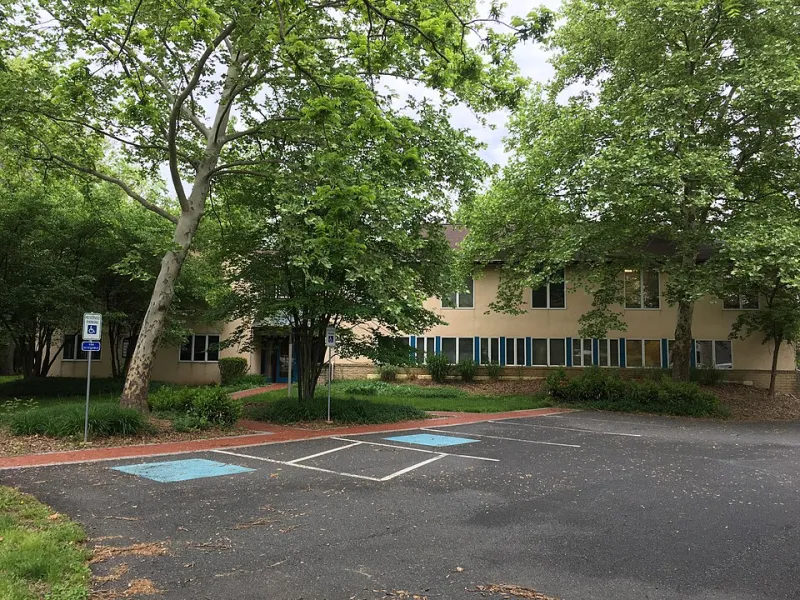
Photo: MatteoDeMaule, CC BY-SA 4.0, via Wikimedia Commons
Beyond the Pulpit
For most of American history, the path from seminary to political influence was informal—a matter of personal networks, denominational relationships, and the organic authority that came with leading a large congregation. That path still exists. But alongside it, a more deliberate infrastructure has emerged. Across the country, theological institutions are offering structured programs designed to produce graduates fluent not only in scripture and doctrine but in lobbying strategy, campaign finance law, coalition building, and regulatory procedure.
This is not accidental. It is the product of a sustained, well-funded effort by religious conservatives—and, increasingly, by progressive faith networks as well—to professionalize the relationship between theological education and political engagement. The result is something that earlier generations of seminarians would have found unfamiliar: a divinity school that teaches the mechanics of a legislative hearing alongside the exegesis of a biblical text.
Mapping the Institutions
The institutions driving this shift vary considerably in their theological commitments and political orientations, but they share a common conviction that faith communities must develop sophisticated political actors if they are to remain relevant in secular governance.
LibertyUniversity's Helms School of Government, housed in Lynchburg, Virginia, has been among the most visible evangelical institutions in this space. Its programs explicitly integrate Christian worldview formation with political science, public policy, and campaign management. Graduates have gone on to work in congressional offices, state legislatures, and national advocacy organizations. The institution's proximity to the policy ambitions of its founding denomination—the Thomas Road Baptist Church tradition—has always made political engagement central to its educational mission.
Regent University, also in Virginia, offers graduate programs in government and public policy through its Robertson School of Government, named for its founder Pat Robertson. The school's curriculum covers constitutional law, legislative strategy, and public administration, and it has produced graduates who have served in federal agencies, on Capitol Hill, and in state-level executive offices across the country.
On the Catholic side, the Catholic University of America in Washington, D.C., has expanded its programs at the intersection of theology and public life, drawing on its proximity to federal institutions and its long-standing relationships with the United States Conference of Catholic Bishops. Its Institute for Policy Research and Catholic Studies hosts scholars and practitioners who move fluidly between theological reflection and policy engagement.
Progressive theological institutions have also entered this space, if with somewhat less fanfare. Union Theological Seminary in New York and Chicago Theological Seminary have both developed programs focused on community organizing, social justice advocacy, and legislative engagement—drawing on traditions of prophetic ministry that extend from the civil rights movement through contemporary immigration and climate advocacy.
What They Teach
The curricula of these programs reveal much about the political theory animating them. At evangelical institutions, coursework frequently emphasizes natural law arguments for policy positions, the constitutional dimensions of religious liberty, and the mechanics of electoral mobilization within faith communities. Students may study how to structure a political action committee, how to engage a congressional office effectively, or how to build a voter registration infrastructure within a church network without triggering IRS scrutiny of the institution's tax-exempt status.
At progressive seminaries, the pedagogical emphasis tends toward community organizing methodology, public narrative techniques drawn from the work of figures like Marshall Ganz, and the legal frameworks governing nonprofit advocacy. Students learn how to conduct power analyses, build broad coalitions across religious traditions, and translate theological commitments into policy language that resonates with secular legislators.
What unites these otherwise divergent programs is a shared pragmatism about political engagement—a conviction that good intentions are insufficient without technical competence, and that theological education must now include instruction in the craft of political influence.
Following the Funding
The expansion of these programs has not occurred without external financial support. Conservative foundations with long histories of funding political infrastructure—including the Lynde and Harry Bradley Foundation, the National Christian Charitable Foundation's affiliated donor networks, and various family foundations associated with the religious right—have directed significant grants toward theological institutions developing advocacy curricula.
On the progressive side, funding from foundations associated with George Soros's Open Society network, as well as from mainline Protestant denominational bodies, has supported community organizing programs at seminaries affiliated with the United Church of Christ, the Presbyterian Church (USA), and the Episcopal Church.
The pattern of funding reveals an important dynamic: these programs are not emerging organically from within theological institutions alone. They are being deliberately seeded and sustained by political actors who recognize that the seminary represents a uniquely potent site for developing long-term political capacity. A pastor trained in advocacy methods who then leads a congregation of two thousand people for thirty years is, from a political organizing standpoint, an extraordinarily valuable asset.
The Graduates and Their Trajectories
Tracking the career paths of graduates from these programs offers the clearest evidence of the pipeline's effectiveness. Alumni of Regent's government school have served in the Department of Justice, the Department of Education, and in numerous state attorneys general offices. Liberty alumni have worked in congressional leadership offices and in the campaigns of prominent Republican candidates. Graduates of progressive seminary advocacy programs have staffed immigration advocacy organizations, environmental justice coalitions, and state-level legislative offices.
Several prominent figures in contemporary faith-based advocacy—including leaders of organizations that regularly testify before Congress and file amicus briefs in Supreme Court cases—received formal training in political engagement at theological institutions. Their fluency in both scriptural language and regulatory procedure makes them unusually effective interlocutors between religious communities and government institutions.
The Accountability Question
The growth of this pipeline raises important questions that neither its architects nor its critics have fully addressed. Theological institutions enjoy significant tax advantages and, in many cases, accreditation structures that differ from those governing secular universities. When a seminary receives external funding to develop a political advocacy curriculum, the line between religious education and partisan political training can become difficult to discern.
Accreditation bodies for theological education—including the Association of Theological Schools—have begun grappling with how to evaluate programs that blend ministerial formation with explicit political training. The question is not merely academic. It bears directly on whether institutions offering such programs should continue to enjoy the full range of legal protections and tax benefits afforded to religious educational institutions.
Federal regulators have largely avoided engaging this question directly, in part because doing so would require them to make judgments about the boundaries of religious education that carry significant First Amendment implications. That regulatory reticence has, in effect, allowed the seminary-to-politics pipeline to develop with minimal external scrutiny.
A Profession Transformed
The emergence of politically trained clergy and faith-based policy professionals represents a genuine transformation in the sociology of American religious leadership. The pastor or priest of an earlier era was expected to provide spiritual guidance and community care. The graduate of today's seminary advocacy programs is expected to do all of that—and also to know how to read a markup session, file a regulatory comment, or brief a congressional staffer on the legislative history of a federal funding formula.
Whether that transformation strengthens or distorts the prophetic tradition of American religious life is a question that theologians, ethicists, and citizens will be debating for some time. What is no longer in question is that it is happening—systematically, intentionally, and with considerable institutional investment behind it.