The Other Religious Left: Progressive Faith Communities Build a Political Infrastructure to Rival the Right

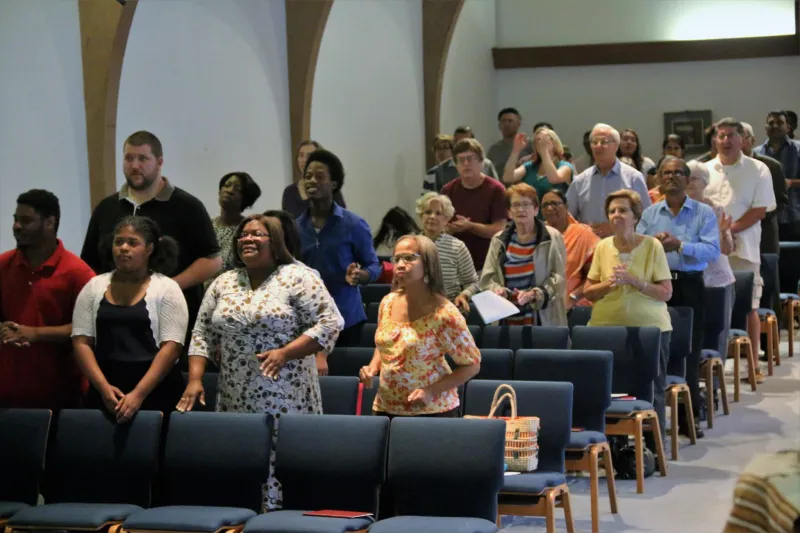
Photo: U.S. Embassy Tel Aviv, CC BY-SA 2.0, via Wikimedia Commons
For much of the past four decades, the phrase "religious voter" has functioned in American political discourse as a near-synonym for conservative evangelical. The association is understandable — the organized political mobilization of evangelical Christians beginning in the late 1970s produced one of the most durable and consequential voting blocs in modern American electoral history. But a quieter, slower, and arguably more theologically diverse countermovement has been gathering momentum in recent years, and its proponents are increasingly confident that the monopoly of the religious right on faith-based political identity is approaching its end.
The movement does not have a single name, a unified leadership structure, or a headquarters. It is, instead, a coalition of coalitions — progressive rabbinical organizations, mainline Protestant denominations, Black church networks, Muslim civic groups, and interfaith social justice organizations — that have begun coordinating their advocacy, pooling their institutional resources, and speaking with something approaching a common political voice. Their ambitions are explicitly electoral as well as moral, and their organizers speak openly about the need to build the kind of durable political infrastructure that the conservative religious establishment spent decades constructing.
Moral Authority as Political Currency
What distinguishes faith-based political advocacy from conventional interest-group lobbying is the currency in which it trades: moral authority. Religious communities do not merely represent constituencies; they claim to speak on behalf of transcendent values. This rhetorical posture has historically given conservative religious leaders a particular kind of political leverage — the ability to frame policy disagreements not as conflicts of interest but as conflicts between righteousness and its opposite.
Progressive religious leaders have increasingly concluded that this same authority is available to them, and that they have for too long ceded its deployment to their conservative counterparts. The Reverend William Barber II, whose Poor People's Campaign has become one of the most visible expressions of progressive faith-based organizing, has been explicit about this strategic insight. By grounding demands for economic justice, voting rights protections, and health care access in the language of scriptural obligation rather than secular liberalism, Barber and his allies have sought to reframe the political valence of religious identity itself.
Similar logic animates the work of organizations like the Religious Action Center of Reform Judaism, T'ruah (the Rabbinic Call for Human Rights), and the national offices of the United Church of Christ and the Evangelical Lutheran Church in America. Each of these institutions has expanded its advocacy capacity in recent years, hiring policy staff, developing legislative relationships, and cultivating media presence in ways that would have seemed unusual for mainline religious bodies a generation ago.
Building the Infrastructure
Political infrastructure is unglamorous work. It requires sustained investment in voter registration, field organizing, data systems, and coalition maintenance — the kind of slow institutional labor that produces results over election cycles rather than news cycles. Conservative religious organizations built this infrastructure over decades, beginning with direct-mail operations in the 1970s and culminating in the sophisticated digital and field programs that characterize groups like the Faith & Freedom Coalition today.
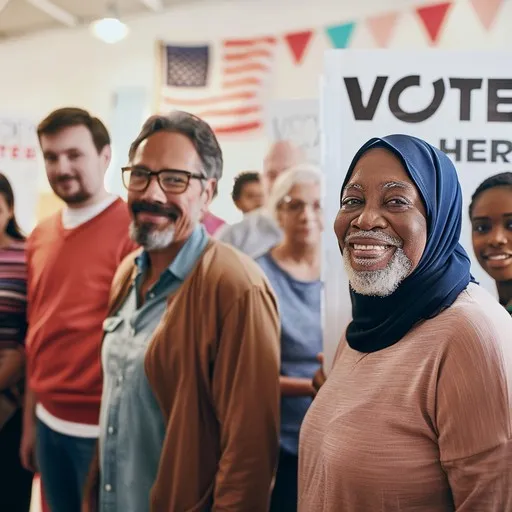
Progressive faith organizations are at an earlier stage of this process, but the pace of development has accelerated noticeably since 2016. Congregations across mainline Protestant denominations have established voter registration programs as explicit ministries. Interfaith organizing networks in swing states including Pennsylvania, Georgia, Arizona, and Wisconsin have invested in paid field staff and year-round civic engagement programming rather than limiting their activity to election-season mobilization. Several progressive rabbinical and Protestant seminaries have introduced coursework in political organizing as a component of pastoral training — a curricular choice that reflects a generational shift in how clergy understand their public role.
Funding has followed. Progressive foundations with secular orientations have recognized faith-based organizing as an effective vehicle for reaching communities that conventional political campaigns struggle to penetrate, and have directed substantial grants toward interfaith civic engagement. Some of this funding has been welcomed; some has prompted internal debate within religious organizations about the appropriate relationship between faith communities and secular political philanthropy.
Points of Friction and Distinction
The progressive religious coalition is not without its internal tensions. The theological diversity that constitutes its greatest asset also creates persistent challenges for unified messaging. A Black Baptist congregation in Atlanta, a Reform Jewish synagogue in suburban Philadelphia, a mainline Episcopal parish in Minneapolis, and a Muslim civic organization in Dearborn, Michigan, may share broadly progressive political commitments while holding substantially different views on specific policy questions — and, more fundamentally, on the theological grounds for political engagement.
These differences become particularly pronounced on questions where progressive secular consensus conflicts with traditional religious teaching. Issues of gender, sexuality, and reproductive rights have generated genuine disagreement within the coalition, and organizers acknowledge that managing these fault lines requires constant attention. The conservative religious coalition has historically benefited from a narrower and more uniform theological base; its progressive counterpart must work harder to maintain coherence across a wider range of traditions.
There is also a structural asymmetry that honest advocates acknowledge. The conservative religious political establishment has spent decades cultivating relationships with Republican elected officials, establishing lines of communication and influence that extend from the precinct level to the White House. Progressive religious organizations are building comparable relationships with Democratic politicians and institutions, but those relationships are newer, and the reciprocal trust they require takes time to develop.
Electoral Significance in a Competitive Landscape
In a national electoral environment defined by narrow margins, the mobilization capacity of progressive faith communities has attracted serious attention from Democratic strategists. Exit polling and academic research consistently show that religiously affiliated voters who attend services regularly skew conservative, but that the gap is less pronounced among younger cohorts and among members of non-evangelical traditions. Mainline Protestants, Reform and Conservative Jews, and religiously observant Black and Latino voters represent constituencies that progressive religious organizing is specifically designed to reach.
In the 2020 presidential election, faith-based organizing in Georgia — where interfaith coalitions worked alongside secular civic groups in a sustained voter registration and mobilization effort — was credited by multiple analysts with contributing meaningfully to Democratic victories in both the presidential race and subsequent Senate runoffs. Organizers in that state have maintained their infrastructure in the years since, treating electoral mobilization as a permanent civic function rather than a campaign-season project.
A Different Kind of Power
Progressive religious leaders are careful to distinguish their vision of political engagement from what they characterize as the transactional model that has defined conservative religious politics. Rather than seeking direct access to executive power or pursuing a legislative agenda driven by denominational priorities, they describe their goal as the cultivation of a civic culture in which religious moral reasoning informs but does not dominate public deliberation.
Whether this posture reflects genuine philosophical commitment or strategic necessity — given the coalition's current distance from the levers of federal power — is a question that only time and electoral outcomes will resolve. What is clear is that the assumption of a monolithic religious political identity, reliably conservative and structurally unchallenged, no longer reflects the reality of American faith-based political life. The other religious left is organizing. And it is doing so with a seriousness of purpose that its counterparts on the right would recognize immediately.