The Gospel According to the Consultant: How a Thriving Industry Packages Christian Identity as Republican Political Currency

Photo: political strategy meeting business consultants American flag office, via thumbs.dreamstime.com
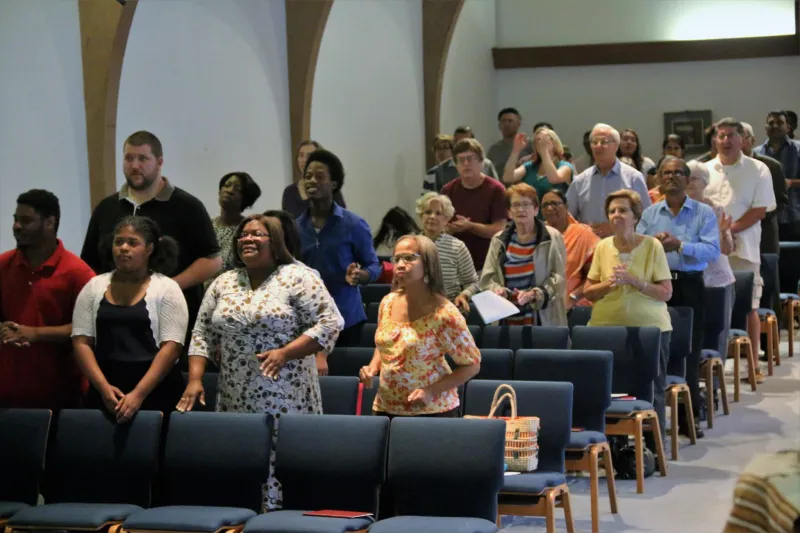
Somewhere between the pew and the polling booth, a transaction is taking place. It is not conducted in a sanctuary, and it bears little resemblance to the spontaneous political engagement that has historically characterized faith communities in America. It happens in strategy sessions, in PowerPoint presentations delivered to campaign finance committees, and in the polished talking-point memos that land in candidates' briefing folders the week before they address an evangelical congregation in rural Ohio or a Catholic men's breakfast in suburban Pennsylvania.
The industry facilitating this transaction is growing, well-funded, and, until recently, largely invisible to the audiences it targets. Faith-based political consulting — the business of helping Republican candidates speak the language of Christian voters with credibility and precision — has become a recognized specialty within the broader GOP political ecosystem. Its practitioners move fluidly between campaign work, nonprofit advocacy, and church networks, and they command fees that reflect the premium their clients place on religious authenticity as an electoral asset.
The Market for Meaning
The emergence of this consulting sector is not accidental. It reflects both the structural importance of religiously observant voters to Republican electoral coalitions and the growing anxiety among campaign professionals that generic appeals to "faith and values" are losing their effectiveness with audiences who have grown increasingly sophisticated about political messaging.
Evangelical Christians, who constitute a substantial share of the Republican primary electorate in most states, have demonstrated over several election cycles that they are capable of withholding support from candidates who mishandle religious language or appear unfamiliar with the cultural markers of evangelical life. The same dynamic, though with distinct theological contours, applies to traditional Catholics, Latter-day Saints, and other faith communities that lean conservative.
"Candidates used to think they could walk into a church, say they believed in God, and collect the votes," said one Republican political strategist with extensive experience in faith outreach who agreed to speak on background. "That stopped working. The voters got smarter, and the candidates had to get smarter too. That's where the consultants come in."
The firms that have positioned themselves to fill this gap vary considerably in their scale and approach. Some are small boutique operations run by former pastors or seminary graduates who leverage their theological training as a professional credential. Others are divisions within larger political consulting firms that have identified faith outreach as a growth market and staffed accordingly. A few operate as hybrid entities — registered as both political consulting operations and religious nonprofit organizations — an arrangement that has attracted scrutiny from campaign finance watchdogs.
Theology as Deliverable
The core product these firms offer is, at its most reductive, translation. They take a candidate's existing policy positions and biographical narrative and render them in the vocabulary, cadence, and conceptual framework most likely to resonate with specific faith communities. This involves detailed audience segmentation — evangelical voters in the South respond differently than evangelical voters in the Midwest; Latino Catholics have distinct political concerns from Irish-American Catholics — and the construction of messaging that speaks to those differences with apparent fluency.
The more sophisticated firms go further, advising candidates not merely on what to say but on how to inhabit religious spaces credibly. This includes guidance on which scriptural references to deploy and which to avoid, how to navigate denominational sensitivities, when to invoke personal testimony and when restraint is more effective, and how to manage the visual and ceremonial dimensions of appearing at faith-based events.
One veteran operative who has worked on Senate and gubernatorial campaigns in three states described the process with notable candor. "We're not manufacturing belief," she said. "We're helping candidates communicate authentically with communities that have their own language. But I'd be lying if I said there wasn't a product being built here. There absolutely is."
The ethical dimension of that product construction is one that divides practitioners themselves. Several consultants contacted by Religious Intelligence declined to characterize their work as commodifying faith, preferring instead the language of "bridge-building" or "cultural translation." Others were more willing to acknowledge the tension inherent in treating theological concepts as strategic assets.
Effectiveness and Its Discontents
The empirical question of whether faith-based consulting actually moves votes is, perhaps surprisingly, contested. Campaigns that have invested heavily in religious outreach infrastructure have produced mixed results. Some analysts point to the role of faith-targeted messaging in close Senate races in Georgia and Arizona as evidence of measurable impact. Others argue that the relationship between religious messaging and vote choice is confounded by so many other variables — candidate quality, economic conditions, turnout operations — that isolating the effect of consulting strategy is methodologically treacherous.
What is less disputed is that the demand for these services continues to grow, which suggests that campaign decision-makers believe they are receiving value. Whether that belief is well-founded or reflects a form of institutional faith in the consultants themselves is a question the industry is not particularly motivated to answer.
For their part, some faith leaders have begun to push back against the entire enterprise. A number of prominent evangelical pastors have published essays and delivered sermons cautioning their congregations against the assumption that political candidates who speak fluent evangelical are therefore trustworthy stewards of evangelical values. The concern, expressed with varying degrees of directness, is that professional religious messaging has become sufficiently sophisticated that it is capable of producing a simulacrum of genuine faith commitment that is indistinguishable, at the retail level, from the real thing.
"We have created a market for religious performance," wrote one Southern Baptist minister in a widely circulated essay last year, "and we should not be surprised that professionals have arrived to supply it."
The Institutional Stakes
Beyond the immediate electoral context, the growth of faith-based political consulting raises questions about the long-term institutional health of the religious communities being targeted. Sociologists of religion have documented a pattern in which the close association of religious identity with a particular political party tends, over time, to erode the distinctiveness and credibility of that identity — particularly among younger cohorts who experience the association as inauthentic or coercive.
If Christian identity becomes, in the perception of a generation of voters, primarily a Republican brand attribute rather than a set of theological commitments with independent moral authority, the consequences for organized religion may be more significant than any single election outcome.
The consultants who have built careers at this intersection are, in most cases, aware of this risk. How they weigh it against the immediate demands of their clients reveals something important about the values that actually govern the business of faith in American politics — and about who, ultimately, is serving whom.