Clerks of the Constitution: How Faith-Aligned Legal Scholars Are Quietly Rewriting the Rules of Church and State
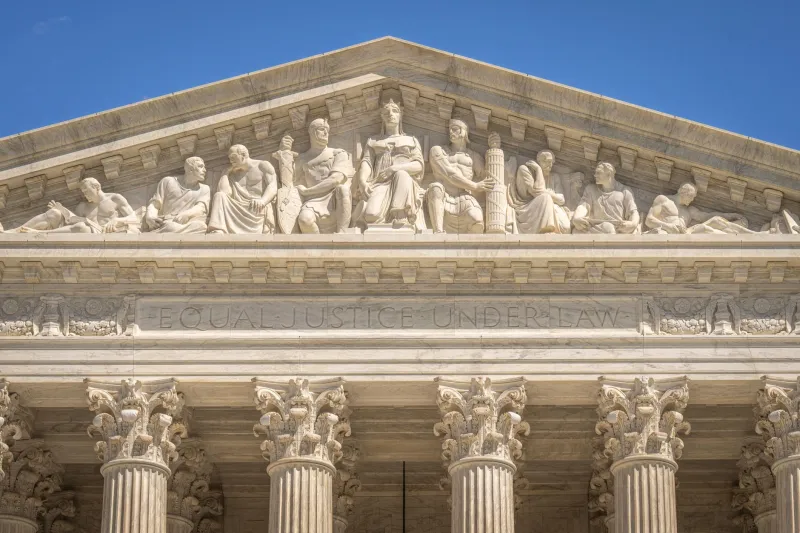
For much of the twentieth century, the dominant interpretation of the Establishment Clause kept government and organized religion at a studied distance. Courts cited a "wall of separation," a phrase Thomas Jefferson used in an 1802 letter, as a guiding principle. That wall, while never absolute, shaped decades of jurisprudence. Today, that interpretation is under sustained, methodical assault — not primarily from elected officials or religious lobbying groups, but from law school faculty offices, academic journals, and faith-affiliated legal institutes whose influence on constitutional doctrine has grown substantially and largely without public notice.
The story of how religious liberty jurisprudence shifted from a relatively settled body of law into one of the most contested areas of American constitutional debate is, in significant part, a story about ideas — and about the institutions that cultivated, refined, and deployed them.
The Intellectual Infrastructure
Over the past three decades, a network of law schools with explicit religious missions, independent legal institutes, and university-affiliated centers has produced a substantial body of scholarship arguing that the prevailing Establishment Clause framework was historically misinformed, philosophically incoherent, and practically hostile to religious communities. Institutions such as Notre Dame Law School's Religious Liberty Initiative, the Becket Fund for Religious Liberty, and affiliated scholars at Catholic University, Baylor Law School, and Brigham Young University's J. Reuben Clark Law School have been central to this project.
The arguments they developed were not invented whole cloth. They drew on genuine historical debates about the original meaning of the First Amendment's religion clauses, on political philosophy traditions emphasizing the autonomy of religious institutions, and on civil rights frameworks that positioned religious believers as a protected class deserving accommodation rather than mere tolerance. What changed was not necessarily the raw material of the arguments but the systematic effort to develop them into a coherent, citable, peer-reviewed body of work capable of influencing courts.
"What you have seen is a long-term investment in legal ideas," said one constitutional law professor at a secular research university who has studied the phenomenon. "These scholars were not writing for law review audiences alone. They were writing briefs in academic form."
From Margins to Majority Opinions
The payoff for that investment has been significant. A series of Supreme Court decisions over the past fifteen years has moved doctrine in directions that would have seemed implausible to many constitutional scholars at the turn of the millennium. Burwell v. Hobby Lobby (2014) extended religious liberty protections to closely held for-profit corporations. Trinity Lutheran Church of Columbia v. Comer (2017) held that a state could not categorically exclude religious organizations from a public benefit program. Espinoza v. Montana Department of Revenue (2020) struck down a state constitutional provision barring public aid from flowing to religious schools. Carson v. Makin (2022) went further, requiring Maine to include religious schools in its private school tuition assistance program.
In each of these decisions, the majority opinions drew on conceptual frameworks that faith-aligned legal scholars had spent years developing and refining. The argument that excluding religious institutions from generally available public programs constitutes unconstitutional discrimination — rather than required separation — was a position that Becket Fund attorneys and sympathetic academics had been advancing in courts and journals for years before it became controlling law.
Justice Clarence Thomas and, more recently, Justice Neil Gorsuch have been particularly receptive to originalist arguments advanced by this scholarly community. But the influence has not been confined to the Court's most conservative members. The intellectual seriousness of the work produced by faith-aligned scholars has compelled engagement from across the ideological spectrum, and their framing of religious liberty as a civil rights issue has occasionally found sympathy in unexpected quarters.
The Think Tank Dimension
Beyond law schools, a parallel infrastructure of legal advocacy organizations has translated academic arguments into litigation strategy. The Becket Fund, the Alliance Defending Freedom, and Liberty Counsel each employ staff attorneys who work in close coordination with sympathetic academics, strategically selecting cases designed to move doctrine incrementally. This coordination between scholarship and litigation is not unique to religious liberty law — liberal public interest legal organizations have long employed similar methods — but its effectiveness in the religious liberty context has been particularly pronounced.
Critics argue that the line between legal scholarship and advocacy has been deliberately blurred. "There is a difference between a scholar who follows evidence wherever it leads and a scholar who begins with a desired outcome and constructs a historical and philosophical argument to support it," said one legal historian who has written critically about originalist approaches to the religion clauses. "Some of what passes for religious liberty scholarship is, in effect, sophisticated brief-writing."
Proponents respond that all constitutional scholarship involves normative commitments, and that the prior consensus around strict separation was itself a product of advocacy — specifically, the mid-twentieth century secularist movement that sought to use the Establishment Clause as an instrument of religious privatization.
Policy Implications Beyond the Courtroom
The influence of faith-aligned legal scholarship extends beyond litigation. Administrative agencies, state legislatures, and congressional offices regularly consult legal frameworks developed in academic settings when drafting religious exemption provisions. The Religious Freedom Restoration Act framework, which requires the government to demonstrate a compelling interest before substantially burdening religious exercise, has been interpreted with increasing breadth in part because the scholarly literature supporting expansive readings has grown more sophisticated and more voluminous.
In state capitals, model legislation drafted with input from faith-aligned legal institutes has been introduced in multiple jurisdictions, extending religious exemption protections into employment law, healthcare regulation, and public accommodations. The intellectual scaffolding for these efforts was constructed in law reviews and faculty seminars years before it appeared in legislative chambers.
A Contested Legacy
The transformation of religious liberty jurisprudence is far from complete, and the scholarly debate that has driven it remains genuinely contested. Critics within the legal academy continue to argue that the new doctrine, if extended to its logical conclusions, would permit religious identity to serve as a general license to opt out of civil obligations — a result they contend is incompatible with a pluralistic society.
Faith-aligned scholars dispute that characterization, arguing that their project is one of restoration rather than revolution: a return to a constitutional framework that takes seriously the distinctive role of religious institutions in American civic life, rather than treating faith as a private preference to be accommodated only when convenient.
What is beyond serious dispute is that the intellectual work product of a relatively small community of religiously committed legal academics has had an outsized effect on American constitutional doctrine. Whether that effect represents a correction of historical error or a distortion of foundational principles is a question that courts, scholars, and citizens will be debating for years to come. What is already clear is that the debate itself has been shaped, more than most observers appreciate, by the deliberate and patient construction of an alternative legal imagination — one built in faith-affiliated institutions and now embedded in the law of the land.