Open Books, Closed Doors: Why the Government Is Coming for Church Finances
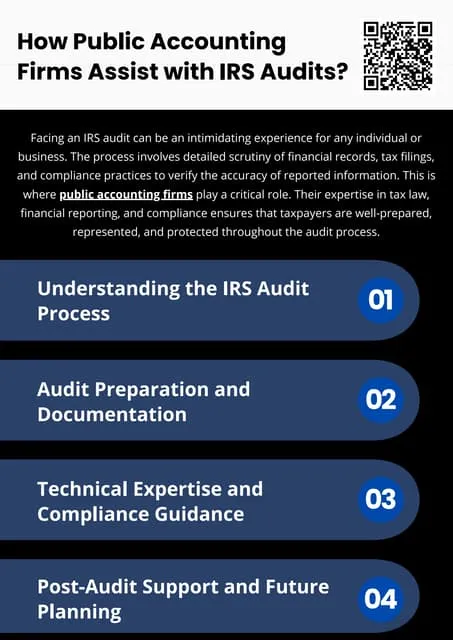
Photo: IRS audit documents church finance accountability, via cdn.slidesharecdn.com
For much of American history, the relationship between government regulators and religious institutions has been governed by a kind of mutual restraint. The state collected no taxes; the church offered no ledgers. That arrangement, rooted in constitutional tradition and reinforced by decades of political deference, is now showing visible signs of strain.
Across the country, state attorneys general, IRS division offices, and congressional oversight committees have quietly intensified their examination of how religious organizations manage — and sometimes mismanage — the billions of dollars that flow through their accounts each year. What was once considered untouchable terrain is increasingly being mapped by auditors.
The Architecture of Exemption
Under Section 501(c)(3) of the Internal Revenue Code, religious organizations enjoy a broad exemption from federal income taxation. Unlike secular nonprofits, churches are not required to file the Form 990 annual disclosure that provides the public with a window into organizational finances. This carve-out, unique in the nonprofit landscape, has long been defended on First Amendment grounds — the argument being that mandatory disclosure would entangle government in the internal affairs of religious bodies in ways the Constitution forbids.
But critics, including a growing number of legal scholars and former IRS officials, contend that the exemption has calcified into a shield for financial misconduct rather than a protection for genuine religious liberty. "The exemption was designed to protect worship, not to insulate wealth accumulation from any form of accountability," said one former senior official in the IRS Tax-Exempt and Government Entities division, speaking on background. "What we're seeing now is a system being stress-tested by its own abuses."
The numbers invite scrutiny. Religious organizations collectively hold an estimated $600 billion in assets in the United States, according to researchers at Indiana University's Lilly Family School of Philanthropy. The absence of standardized disclosure requirements means that a significant portion of that wealth moves with virtually no external oversight.
Case Studies in Scrutiny
The shift in regulatory posture is most visible at the state level, where attorneys general in several jurisdictions have begun exercising their parens patriae authority — the legal standing to protect the public interest — to investigate faith-based institutions.
In California, the attorney general's office opened a formal inquiry in 2023 into a Southern California megachurch following complaints from former staff members alleging that restricted charitable funds had been redirected toward real estate acquisitions and leadership compensation packages. The church, which has not been named in any public charging document, disputed the characterization of its financial practices and cited religious autonomy protections. The investigation remains open.
In Texas, a state legislative committee convened hearings in late 2023 examining whether certain faith-based social service organizations — which receive substantial state contracts for foster care and refugee resettlement — had commingled public funds with general operating budgets in ways that obscured their use. Several organizations voluntarily submitted to independent audits; at least two declined, citing constitutional protections.
At the federal level, the IRS has faced persistent criticism from watchdog groups for what they describe as institutional reluctance to audit churches even when credible evidence of political activity or financial irregularity exists. The Johnson Amendment, which prohibits tax-exempt organizations from endorsing political candidates, has been enforced with notable infrequency against religious entities — a disparity that advocacy organizations on both the left and right have used to press for broader reform.
The Transparency Argument
Proponents of increased oversight argue that the case for reform is not ideological but structural. The current framework, they contend, creates perverse incentives: institutions that operate transparently are placed at a competitive disadvantage relative to those that exploit ambiguity.
"Donors deserve to know whether their contributions are funding the mission they were told about," said Holly Hollenbeck, a nonprofit governance attorney based in Washington, D.C., who advises both secular and faith-based organizations. "The absence of disclosure requirements doesn't protect religious freedom — it protects opacity. Those are very different things."
Several faith communities have reached the same conclusion independently. A number of mainline Protestant denominations, including the Episcopal Church and the Evangelical Lutheran Church in America, voluntarily publish financial statements that exceed the disclosure standards required by law. Their leaders argue that transparency is not merely a legal obligation but a theological one — an expression of stewardship that reinforces donor trust.
"We believe accountability is a form of faithfulness," said one denominational finance officer, who asked not to be identified by name. "If you're asking people to give sacrificially, you owe them an honest accounting of where that sacrifice goes."
Resistance and Its Rationale
Not everyone accepts that framing. A significant constituency within American religious life views the audit trend with deep suspicion, characterizing it as the leading edge of a broader effort to subordinate religious institutions to secular authority.
Conservative legal organizations, including the Alliance Defending Freedom and the First Liberty Institute, have argued in published analyses that expanded disclosure requirements would expose religious organizations to targeted harassment, chilling the exercise of constitutionally protected religious activity. They point to historical cases in which donor lists obtained by government agencies were subsequently used to pressure minority religious communities.
"The government doesn't get to decide what counts as a legitimate religious expenditure," argued one senior attorney at a religious liberty litigation firm. "Once you accept that premise, you've already lost the argument about autonomy."
That position commands substantial support in Congress, where any legislative effort to impose Form 990 requirements on churches would face formidable opposition from members on both sides of the aisle who represent constituencies with large religious populations.
A Shifting Landscape
What is changing, however, is the internal political economy of American religion itself. Surveys conducted by Gallup and the Pew Research Center over the past decade consistently show that younger Americans — including younger religious Americans — hold significantly more favorable views of financial transparency than their predecessors. Congregants who have grown accustomed to the disclosure norms of the broader nonprofit sector increasingly apply those same expectations to their own faith communities.
Several high-profile financial scandals at prominent religious institutions over the past five years have accelerated that shift. When benefactors discover that donations designated for humanitarian work funded executive travel or real estate holdings, the reputational damage extends well beyond the institutions directly implicated.
For religious organizations navigating this environment, the strategic calculus is becoming clearer, if not easier. Those that embrace voluntary transparency — publishing audited financial statements, establishing independent oversight boards, and communicating openly with congregants about budget priorities — appear better positioned to weather regulatory attention and sustain donor confidence. Those that resist may find that the government's patience, and the public's, is no longer inexhaustible.
The audit, it turns out, may be less a threat to religious liberty than a mirror held up to institutions that have long preferred not to look.