Charity on Paper, Politics in Practice: How Religious Nonprofits Exploit Tax Law to Bankroll Partisan Agendas
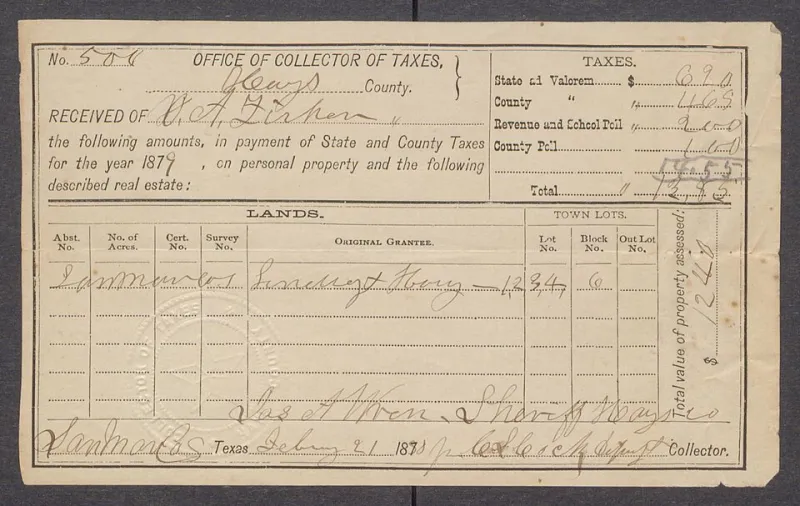
Photo: Lock, L.S.[?], CC BY 4.0, via Wikimedia Commons
Every year, millions of American households claim charitable deductions for donations made to religious nonprofits — organizations that, under Section 501(c)(3) of the Internal Revenue Code, are legally prohibited from participating in partisan political campaigns. The deduction is premised on a simple social contract: the public forgoes tax revenue in exchange for organizations that serve the common good rather than factional political interests.
Increasingly, however, tax attorneys, former nonprofit administrators, and campaign finance researchers say that contract is being quietly broken — not through brazen violations that invite IRS scrutiny, but through a sophisticated choreography of fund transfers, rebranded programming, and strategic ambiguity that keeps faith-based organizations in technical compliance while directing resources toward unmistakably partisan ends.
The Mechanics of Misdirection
The basic structure is not difficult to understand, even if its execution can be labyrinthine. A major donor — often a wealthy individual with clear partisan preferences — makes a substantial, tax-deductible contribution to a religious 501(c)(3). That organization then funds what it describes as "civic education," "voter engagement," or "policy research" initiatives. Those initiatives, in turn, concentrate almost exclusively on issues and constituencies that align with one political party's platform, mobilize specific voter blocs, or produce materials that function as opposition research against disfavored candidates.
"The law draws a line between issue advocacy and express candidate advocacy," explains one tax attorney who has advised both nonprofit boards and federal campaigns and requested anonymity to speak candidly. "But that line has become almost theoretical in practice. You can run a multimillion-dollar operation that every informed observer recognizes as partisan infrastructure, and as long as you never print the words 'vote for' on a mailer, the IRS has very little standing to act."
The Internal Revenue Service's enforcement record on this front has been, by most accounts, negligible. The agency has revoked the tax-exempt status of a political organization posing as a church precisely once in the modern era — a 1992 action against a small North Carolina congregation that purchased newspaper ads urging voters to reject Bill Clinton. In the decades since, despite exponential growth in the scale and sophistication of faith-based political operations, no comparable enforcement action has followed.
Following the Money
Tracing specific funding flows is difficult by design. Unlike political action committees, which must disclose donors and expenditures to the Federal Election Commission, 501(c)(3) organizations are generally not required to identify their contributors publicly. The Form 990, the annual informational return these organizations file with the IRS, reveals aggregate financial data and lists the highest-compensated employees, but it does not map the donor networks that sustain major operations.
Nonetheless, investigative researchers at several academic institutions and nonpartisan watchdog organizations have reconstructed partial funding maps using state-level disclosures, court filings, and leaked internal documents. What those maps reveal is a recurring pattern: large contributions from a concentrated group of ideologically aligned donors flow into religious nonprofits, which then distribute grants to a constellation of smaller organizations engaged in voter registration drives, legislative testimony, media production, and candidate training — all framed in the language of faith.
One former program director at a mid-sized evangelical nonprofit in the South, who left the organization over ethical concerns, described the internal logic plainly. "We were told constantly that our work was 'kingdom work,' that we weren't doing politics, we were doing ministry," she said. "But every strategic planning meeting was about which districts we needed to move, which primaries mattered, which legislators needed to hear from our network. The religious framing was real for some people. For the leadership, it was also a legal strategy."
The Educational Exemption as Political Shield
Perhaps the most widely exploited provision in this space is the allowance for 501(c)(3) organizations to engage in "educational" activities. The IRS defines education broadly enough to encompass almost any effort to inform the public on matters of civic or policy concern — a definition that religious organizations have stretched to cover voter guides, candidate forums, policy briefings for legislators, and media campaigns on contested social issues.
Voter guides distributed by faith-based groups represent a particularly instructive case study. These documents, typically framed as neutral comparisons of candidate positions on issues important to religious communities, are crafted with sufficient care to avoid explicit endorsements while leaving little doubt about their intended effect. Candidates who support abortion restrictions, for instance, are described in language drawn directly from the organization's theological commitments; candidates who do not are described in terms that signal moral deficiency to the intended audience.
"A competent lawyer can make almost anything look educational," said one campaign finance scholar at a major research university. "The question is whether the primary purpose of the activity is genuinely to inform, or whether information is the vehicle and political mobilization is the destination. The IRS almost never asks that question seriously."
Structural Complicity and the Question of Reform
Critics of the current system argue that the problem is not merely one of bad actors exploiting loopholes, but of structural incentives that make such exploitation rational and nearly risk-free. Because the IRS lacks the resources and, many argue, the political will to audit religious organizations aggressively, the effective penalty for crossing the line between education and electioneering is close to zero. Meanwhile, the financial rewards — access to a donor base motivated by both faith and political conviction, combined with the tax advantages that make large contributions more attractive — are substantial.
Several reform proposals have circulated in policy circles for years without gaining legislative traction. Some advocates have called for enhanced disclosure requirements that would compel 501(c)(3) organizations to identify major donors and map grant-making to downstream political activity. Others have proposed tightening the definition of permissible educational activity, requiring that voter guides and similar materials meet an objective neutrality standard. A third camp argues that the Johnson Amendment — the 1954 provision prohibiting 501(c)(3) organizations from endorsing candidates — should be either strictly enforced or repealed entirely, eliminating the ambiguity that makes the current gray zone possible.
Each approach faces formidable opposition. Religious liberty advocates warn that enhanced IRS oversight of faith-based organizations risks unconstitutional entanglement with church governance. Defenders of the status quo argue that the existing rules, imperfect as they are, protect a genuine sphere of civic participation for religious communities that should not be sacrificed to partisan anxieties about influence.
The Public Subsidy Question
Underlying all of these debates is a question that rarely receives the direct attention it deserves: when a donor receives a federal tax deduction for a contribution that ultimately funds partisan political activity, the public is effectively subsidizing that activity. Every dollar deducted from taxable income is a dollar of foregone federal revenue — revenue that would otherwise fund public services. In that sense, the charitable deduction is not merely a private benefit; it is a public expenditure.
"We have decided as a society that certain kinds of organizations merit public support through the tax code," said one former senior official at a nonprofit regulatory body. "The premise of that decision is that these organizations serve everyone, not just their donors' political preferences. When that premise is systematically violated, it is not just a tax compliance issue. It is a question about who the public is actually subsidizing and why."
For now, the architecture remains largely intact, its mechanisms obscured by layers of religious language, legal formalism, and institutional opacity. Whether the gap between the law's stated purpose and its practical operation will ever close depends, in no small part, on whether policymakers conclude that the question is worth asking seriously.