Border Watchers: The Faith-Driven Networks Building Infrastructure to Intercept Medication Abortion Across State Lines
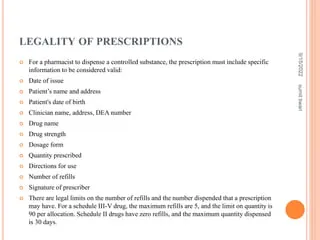
Photo: prescription pill bottle legal documents courthouse steps, via image.slidesharecdn.com
In the months following the Supreme Court's 2022 decision in Dobbs v. Jackson Women's Health Organization, the conventional understanding was that abortion policy had been returned to the states. What has emerged since, however, is considerably more complicated. Across a loosely connected web of faith-based organizations, legal advocacy nonprofits, and church-affiliated community groups, a quiet effort is underway to ensure that state-level restrictions do not simply dissolve at the nearest border.
The focus of this effort is medication abortion — specifically mifepristone and misoprostol, the two-drug regimen that now accounts for the majority of abortions performed in the United States. Because these medications can be prescribed via telehealth and delivered through the mail, they have become both the primary vehicle for abortion access in restricted states and the principal target of those seeking to extend those restrictions.
The Architecture of Coordination
The organizational landscape involved in this effort is not monolithic. It ranges from established national groups with legal departments and Washington lobbying operations to informal networks of parish volunteers who monitor local pharmacies and flag suspected out-of-state prescription fulfillment to state attorneys general offices. What links them is a shared theological conviction that human life begins at fertilization, and a practical commitment to translating that conviction into enforceable policy regardless of jurisdictional complexity.
Several organizations operating under broad pro-life religious mandates have, according to legal filings and organizational documents reviewed by Religious Intelligence, developed data-sharing protocols that aggregate information about telehealth providers operating across state lines, pharmacy networks fulfilling prescriptions in restricted states, and nonprofit groups that assist women in obtaining medication remotely. Attorneys representing reproductive health providers describe receiving civil investigative demands — a form of pre-litigation information request — that appear coordinated across multiple state jurisdictions simultaneously, suggesting a level of strategic alignment that goes beyond coincidental parallel advocacy.
"What you're seeing is not spontaneous," said one reproductive rights litigator who has worked on cases in four states and requested anonymity because of ongoing proceedings. "There is infrastructure here. There are shared databases, shared legal templates, and shared communication channels. The religious framing is sincere, but the operational sophistication is that of a coordinated legal campaign."
Community Reporting and the Question of Surveillance
Perhaps the most contested element of this emerging infrastructure is what critics describe as community-level monitoring. In several states with near-total abortion bans, faith-based organizations have established what they describe as "life affirmation networks" — voluntary systems through which congregation members are encouraged to report information about neighbors, family members, or community figures they believe may be seeking or facilitating medication abortion access.
Proponents of these systems frame them in explicitly pastoral terms. The argument, articulated in guidance documents distributed by at least two national Catholic advocacy organizations, is that such reporting is an act of fraternal correction rooted in Catholic social teaching — an obligation to protect both the unborn and the women whom these groups believe are being harmed by abortion.
Critics, including civil liberties organizations and a number of mainline Protestant denominations, characterize the same systems as surveillance infrastructure with serious constitutional implications. The American Civil Liberties Union has filed public records requests in multiple states seeking communications between faith-based organizations and state law enforcement agencies related to medication abortion enforcement.
"The First Amendment protects religious advocacy," noted a constitutional law scholar at a Midwestern public university who studies the intersection of religious freedom and reproductive rights. "What it does not do is immunize conduct that would otherwise constitute an actionable privacy violation simply because that conduct is motivated by religious belief."
The Legal Strategy: Commerce Clause and Beyond
On the litigation front, several faith-affiliated legal organizations — including groups that have historically focused on religious liberty claims — have begun filing or funding cases that test whether states can regulate conduct that occurs, at least in part, outside their borders. The legal theories being advanced are varied and, in many instances, novel.
One approach involves arguing that the shipment of mifepristone into a restricted state constitutes a violation of that state's law regardless of where the prescription was written or the medication dispensed. This theory has been advanced in amicus briefs filed by religious liberty organizations in cases pending in Texas and Idaho, and it directly challenges the longstanding presumption that federal law — including FDA approval of mifepristone — preempts state-level restrictions on the drug's distribution.
Another legal avenue being explored involves the All Writs Act, a federal statute that some conservative legal advocates have argued could be used by courts in restricted states to compel out-of-state entities to comply with local abortion laws. Legal scholars across the ideological spectrum have described this theory as aggressive and largely untested, but its appearance in briefs filed by faith-affiliated organizations signals the breadth of the legal imagination being applied to this issue.
Federalism, Faith, and the Limits of Advocacy
The debate over these interstate enforcement efforts cuts across traditional political and religious lines in ways that complicate easy categorization. Some religious conservatives who oppose abortion have nonetheless expressed discomfort with what they view as an overreach of state power into the private medical decisions of individuals in other jurisdictions. A number of evangelical legal scholars have published arguments contending that robust federalism — including respect for the laws of states that have chosen to protect abortion access — is itself a value consistent with a Christian political theology.
Conversely, some progressive faith communities that support abortion access have found themselves defending the authority of state governments — typically a posture associated with conservative federalism — when those states have enacted protective legislation.
"The theological and constitutional questions here are genuinely hard," said a scholar of religion and law at a private religious university who has written on both sides of the abortion debate. "People of deep faith are arriving at very different conclusions about what faithfulness requires, and the legal system is not well-equipped to adjudicate those disagreements."
What is clear is that the post-Dobbs landscape has not produced the clean jurisdictional resolution that either side anticipated. Instead, it has generated a contested frontier — legal, technological, and moral — where faith-based organizations are among the most active and consequential participants. Whether the infrastructure being built in that frontier ultimately constrains or expands the reach of abortion restriction will depend, in no small part, on courts that have not yet been asked to answer questions they may soon be unable to avoid.