Blessed and Untaxed: Inside the Political Machinery Hiding Behind Church Exemptions
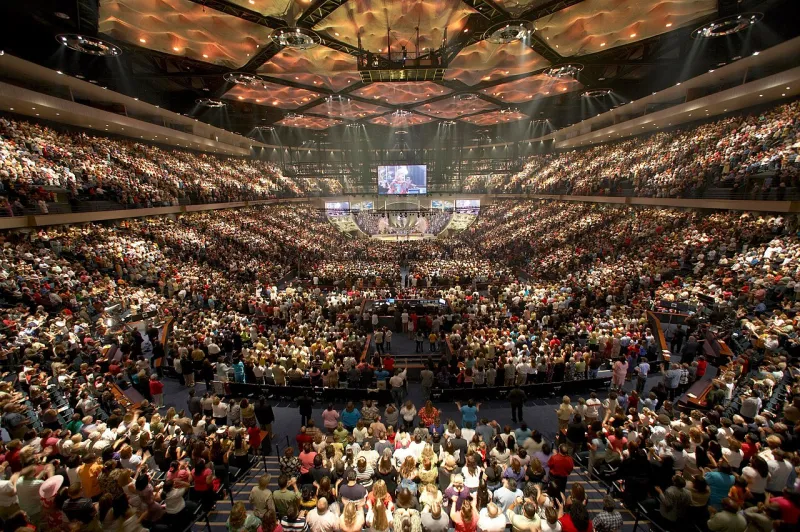
Photo: megachurch interior large congregation Sunday service aerial view, via upload.wikimedia.org
When Congress codified the Johnson Amendment into the Internal Revenue Code in 1954, the intention was straightforward: organizations granted tax-exempt status under Section 501(c)(3) would refrain from directly endorsing or opposing political candidates. Churches, charities, and educational institutions accepted that bargain in exchange for freedom from federal taxation and the ability to receive tax-deductible donations. Seven decades later, that bargain is fraying at the edges — and for some of America's largest religious institutions, it may have already collapsed.
Across the country, megachurches commanding congregations in the tens of thousands have constructed sophisticated financial ecosystems that blur the boundary between pastoral ministry and political mobilization. The mechanisms are rarely crude. No pastor simply writes a check to a campaign committee. Instead, resources flow through affiliated nonprofit networks, voter registration drives technically classified as civic education, and issue-advocacy organizations that operate in legal proximity to the church without being legally identical to it.
The Architecture of Ambiguity
Understanding how this works requires a basic grasp of nonprofit law — specifically, the distinction between a 501(c)(3) entity and its frequent companion, the 501(c)(4) social welfare organization. While the former is prohibited from partisan political activity, the latter may engage in it provided that electioneering does not constitute the organization's "primary" purpose. Courts and the IRS have never established a precise numerical threshold for what "primary" means, and that ambiguity is not accidental — it is load-bearing.
Large churches frequently establish affiliated 501(c)(4) arms or maintain close operational ties to independent political advocacy groups. Shared staff, shared office space, and shared mailing lists are common. Donations made to the tax-exempt church may subsidize infrastructure — communications technology, data management systems, field organizers — that the affiliated advocacy group then uses during election cycles. Because the financial transfer occurs at the level of operational overhead rather than direct monetary grants, it rarely triggers IRS scrutiny.
"The law was written for a simpler era," said one tax attorney who advises nonprofit organizations and requested anonymity because of ongoing client relationships. "The idea that you can cleanly separate a church's administrative budget from the political outputs of its affiliated entities — that's a legal fiction that almost no one in the field takes seriously anymore."
Case Studies in the Gray Zone
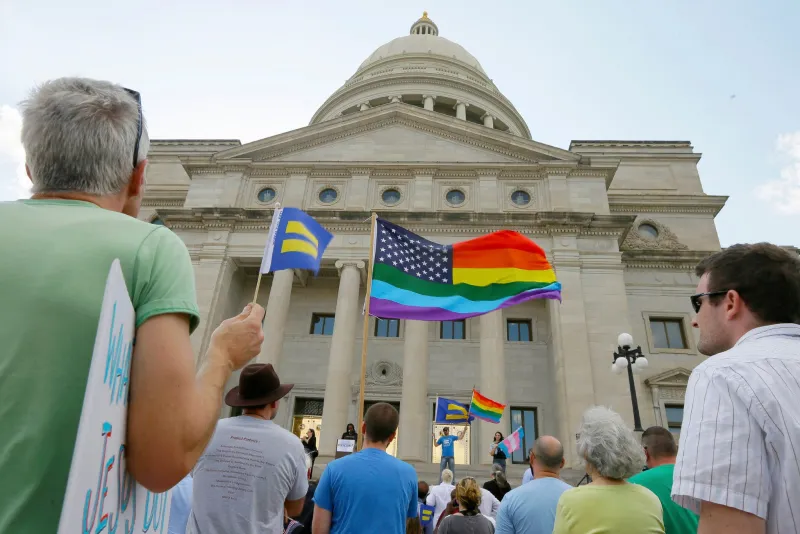
Several high-profile examples illustrate how the system operates in practice. During recent ballot initiative campaigns over issues including same-sex marriage, abortion access, and school choice voucher programs, researchers at campaign finance transparency organizations documented substantial resource contributions originating from church networks. In some instances, the contributions took the form of in-kind services: church communications teams designed and distributed campaign literature; church facilities hosted campaign strategy sessions; church leadership provided explicit endorsements from the pulpit — conduct that, if documented and prosecuted, would constitute a clear Johnson Amendment violation.
The enforcement record tells its own story. Since the Johnson Amendment's passage, the IRS has formally revoked the tax-exempt status of a religious organization for political activity on precisely one occasion — a 1992 case involving a small church in Binghamton, New York, that purchased newspaper advertisements opposing a presidential candidate. No megachurch has ever faced equivalent consequences, despite documented instances of far more systematic political engagement.
Former IRS officials have acknowledged that the agency operates under a self-imposed constraint: a 1954 revenue ruling that requires a "high-level Treasury official" to approve any church tax examination. Combined with chronic understaffing in the exempt organizations division and persistent congressional pressure from lawmakers sympathetic to religious institutions, the practical result is an enforcement vacuum.
First Amendment Friction
Proponents of expansive church political activity argue, not without legal basis, that the Johnson Amendment itself represents a constitutionally suspect restriction on religious speech. The argument gained institutional traction during the Trump administration, when an executive order directed the Treasury Department to exercise "maximum enforcement discretion" in applying the amendment — a directive that, while legally toothless in formal terms, signaled a political environment deeply hostile to enforcement.
First Amendment scholars are divided. Some contend that compelling religious leaders to remain silent on electoral matters as a condition of tax exemption constitutes an unconstitutional burden on free exercise and free speech. Others argue that the exemption is a government subsidy, and that conditioning subsidies on restraint from partisan activity is constitutionally permissible — a position the Supreme Court has endorsed in analogous contexts.
What both camps tend to agree on is that the current arrangement — in which the law formally prohibits direct electoral endorsements while enforcement mechanisms are effectively dormant — produces the worst of both worlds. It creates an uneven playing field between religious organizations that scrupulously comply with the amendment and those that openly disregard it, while providing neither the constitutional clarity that genuine deregulation would bring nor the accountability that genuine enforcement would require.
The Transparency Deficit
Perhaps the most consequential feature of the current system is what it conceals from the public. Unlike super-PACs and other political committees, which are required to disclose their donors under federal election law, churches and their affiliated nonprofits operate with minimal financial transparency requirements. The IRS Form 990, the primary public accountability document for most nonprofits, is not required of churches at all. The result is that billions of dollars flowing through religious institutions toward political objectives remain effectively invisible to voters, journalists, and regulators alike.
Campaign finance reform advocates have proposed a range of remedies — mandatory financial disclosure for religious institutions that cross certain revenue thresholds, clearer statutory definitions of prohibited political activity, and dedicated enforcement resources within the IRS exempt organizations division. Each proposal faces formidable political opposition, both from religious liberty advocates and from lawmakers whose own electoral coalitions depend on the political infrastructure that the current system enables.
For now, the machine keeps running. Congregants who place offerings in collection plates on Sunday mornings may have little awareness of where those resources ultimately travel. Tax attorneys who advise religious nonprofits continue to find creative structural arrangements that satisfy the letter of a law whose spirit has become increasingly difficult to locate. And the IRS, understaffed and politically constrained, watches from a distance.
The Johnson Amendment remains on the books. Whether it remains in effect is a different question entirely.