Independent Pulpits: How Black Congregations Are Rewriting Their Own Political Rules
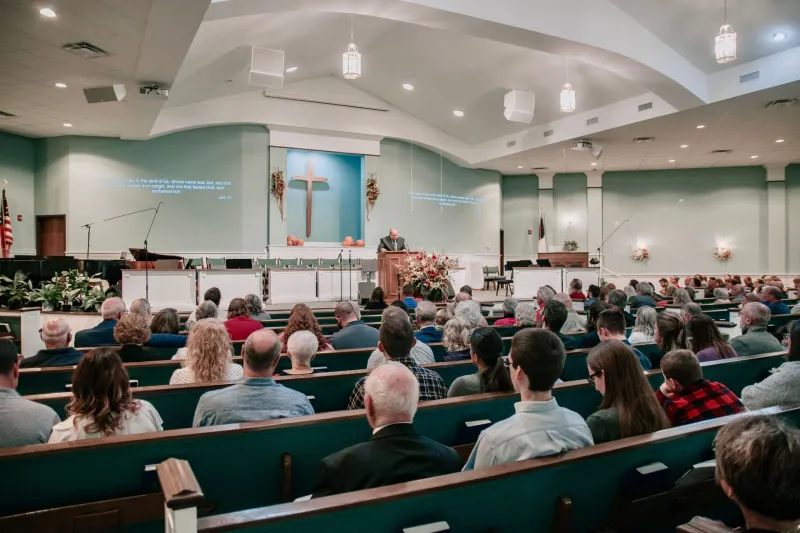
For most of the past half-century, the relationship between Black churches and the Democratic Party functioned less like an alliance and more like an assumption. Voter registration drives, Sunday morning endorsements, and get-out-the-vote infrastructure flowed reliably from pew to polling place, election cycle after election cycle. That assumption is now under serious strain.
Across a widening arc of congregations — from storefront sanctuaries in Atlanta's southwest neighborhoods to established Baptist fellowships in Milwaukee and Philadelphia — a generational reckoning is underway. The question being asked, often quietly and sometimes from the pulpit itself, is whether institutional loyalty to a political party has come at the cost of institutional fidelity to the gospel.
A Loyalty Audited, Not Abandoned
It would be imprecise to characterize what is happening as a wholesale departure from the Democratic coalition. Polling data consistently show that Black Protestant voters remain among the most reliably Democratic constituencies in the American electorate. What is shifting, according to pastors and political organizers interviewed across five states, is the nature of the relationship — moving from deference toward demand.
"We are not leaving the table," said one pastor of a mid-sized Pentecostal congregation in Charlotte, North Carolina, who asked not to be identified by name while his church deliberates its formal advocacy posture. "We are deciding what we are willing to bring to it."
That recalibration is being driven in part by generational change within congregations themselves. Younger Black churchgoers — those under forty who came of age after the 2008 election — express markedly different expectations about what political engagement should produce. Where their elders often framed voting as an act of collective memory, honoring the sacrifices of the civil rights movement, younger congregants are more transactional in their orientation. They want demonstrable policy returns, and they are increasingly willing to withhold electoral support when those returns do not materialize.
Issue-by-Issue Advocacy as Institutional Strategy
Several congregations have begun formalizing what organizers describe as "issue-first" advocacy models — structures designed to evaluate candidates and parties against a congregation-specific policy agenda rather than party affiliation. These agendas are frequently heterodox by conventional partisan standards, combining commitments to criminal justice reform and expanded health care access with firm positions on school choice and, in some communities, opposition to certain LGBTQ policy frameworks.
In Georgia, a coalition of predominantly Black churches operating under a loosely affiliated network has spent the past two election cycles compiling what they call a "civic covenant" — a document outlining non-negotiable policy priorities that any candidate seeking congregational support must address directly. The coalition has declined to endorse candidates in statewide races where it deemed responses inadequate, a posture that drew attention from both party establishments during the 2022 midterm cycle.
"The parties are accustomed to us being a delivery mechanism," said a political strategist who has worked with several Black faith coalitions in the South. "They are less accustomed to us being a negotiating party. That is the fundamental change."
Republican Outreach and Its Limits
The Republican Party has not been passive in observing these developments. Outreach efforts targeting Black church communities have intensified since 2020, with party operatives and aligned organizations investing in relationship-building at the pastoral level. Some of those efforts have found modest traction, particularly around issues of school choice, small business development, and religious liberty protections.
Yet several Black pastors expressed skepticism about the sincerity of Republican overtures, noting that outreach tends to intensify immediately before elections and dissipate thereafter. Others pointed to immigration rhetoric, voting rights legislation, and the broader cultural politics of the contemporary Republican Party as factors that make sustained alignment untenable for most Black congregations, regardless of agreement on specific issues.
The more significant electoral consequence may not be a partisan realignment but rather a mobilization gap. If Black churches become less invested in driving turnout for Democratic candidates — not because they are voting Republican, but because they are voting less enthusiastically — the effects in closely contested states like Pennsylvania, Michigan, and Georgia could be decisive.
Younger Pastors, Different Frameworks
The most consequential actors in this shift may be clergy who were ordained within the past decade. Trained in a post-Obama, post-Ferguson theological environment, many younger Black pastors approach political engagement through frameworks that blend prophetic tradition with a wariness of institutional co-optation.
Several seminaries with significant Black student enrollment have introduced coursework on what faculty describe as "ecclesial independence" — the theological and practical case for maintaining congregational autonomy from external political structures. That pedagogical shift is producing clergy who are, by design, less susceptible to the party-church arrangements their predecessors accepted.
"The prophetic tradition in Black Christianity has always been about speaking truth to power," said one divinity school professor who teaches courses on the Black church and American democracy. "The question a new generation is asking is whether you can do that while also serving as a reliable precinct captain."
Electoral Calculus in the Balance
For campaign strategists on both sides of the partisan divide, the reconfiguration of Black church political identity presents a genuine analytical challenge. Traditional models for estimating Black Protestant turnout and vote share assumed a level of institutional coordination that may no longer be reliable. Churches that once delivered predictable voter contact and mobilization infrastructure are now making those resources conditional.
That conditionality, in itself, represents a form of political power — perhaps a more durable form than unconditional loyalty ever provided. Whether the parties respond with substantive policy engagement or merely more sophisticated outreach theater will likely determine how this realignment ultimately resolves. Black congregations, for their part, appear prepared to wait for an answer.